
I’ve been cosplaying as Alice Cullen for a long time.
Long enough that when I started, identifying a screen-accurate costume piece usually meant staring at grainy screenshots, combing through promotional photo galleries, and hoping that someone, somewhere on the Internet had identified where a specific cardigan or tank top or dress had originally retailed. Long enough that many of those same pieces, once bought brand new or something close to it, are now being labelled “vintage Y2K” in Depop listings.
Long enough that people who were children when the first Twilight movie came out are now adults, discovering the series for the first time – or rediscovering something they loved before they were old enough to feel embarrassed by it.
But mostly, I’ve been doing this long enough to remember when dressing up like a Twilight character on the Internet was much more likely to get you laughed at than earn you followers, and long enough to have watched the fandom retreat, regroup, and eventually explode back into popular culture in a way I don’t think any of us who were there the first time could’ve predicted.
Somewhere along the way, cosplay changed, too. What started for me with a haircut, a few outfits, and an enormous amount of enthusiasm for a pixie vampire eventually became a screen-accurate wardrobe, live performances, annual travel to the Pacific Northwest, content creation, and some of the most important friendships of my life.
What hasn’t changed quite as much is… well, me.
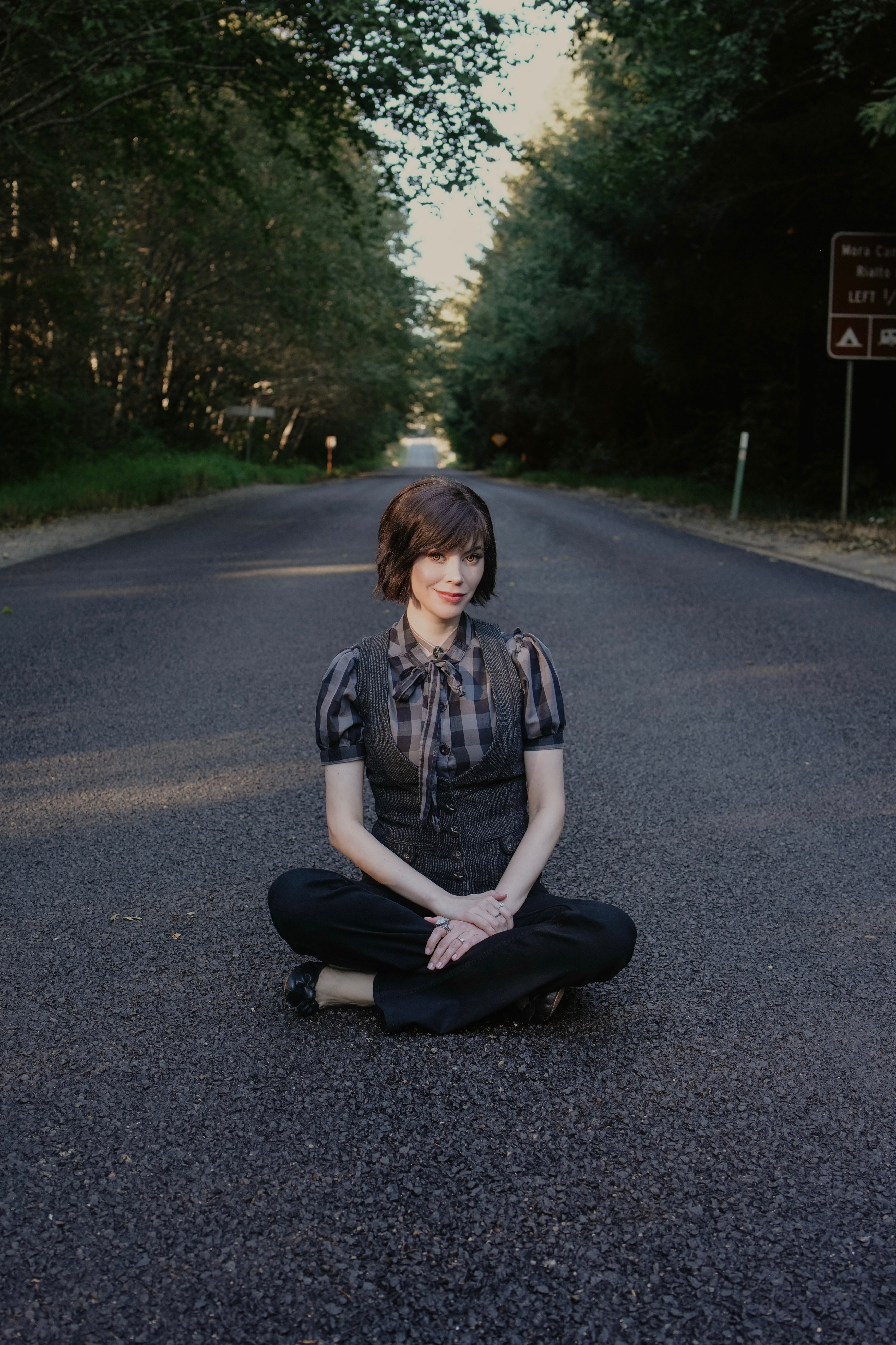
There’s an assumption that after doing something publicly for long enough, you eventually develop the proverbial thick skin. That criticism stops bothering you, strangers stop being able to hurt your feelings, and you learn to shrug off whatever the comment section decides to throw at you that day.
I wish I could say that’s been my experience.
Over time, I’ve grown better at knowing which opinions matter to me, and I’ve learned that not every comment deserves my attention, let alone a response. But I’m still sensitive. Sometimes a mean comment hurts my feelings even when I know it shouldn’t, and sometimes, I’ll remember something a stranger said to me longer than the stranger probably remembers saying it.
For years, friends and commenters alike have offered me some variation of the same advice: “you need to develop a thicker skin.” After all, if you’re going to post yourself online, people are going to be mean. If you’re going to cosplay, people are going to judge the way you look. If you put yourself out there, you have to accept what comes with it.
The longer I do this, the less convinced I am that we should. Because there’s a difference between accepting that people will have opinions about something you make and accepting that making something publicly gives people permission to be cruel to you.
I can’t control what strangers say about me, but “people are going to be mean anyway” has never struck me as a compelling argument for why we should consider that meanness normal – or why the responsibility for it should fall entirely on the person being asked to develop thicker skin.
Which brings me to Temu – your one-stop destination for the latest fashion products, cosmetics and more! Because if you spend any time on TikTok or Instagram, you’ve probably seen some variation of the phrase “Temu Twilight.”
Temu Alice. Temu Edward. Temu Cullens.

It shows up in my comment section regularly, and I see it on content from other Twilight cosplayers, too.
I understand the joke. “Temu” has become shorthand for the cheaper, less impressive version of the thing you actually wanted, so when you call a cosplayer “Temu Edward,” the implication is that you ordered Robert Pattinson and this unfortunate man on your screen is what arrived.
Haha. I get it.
What I’m less sure about is what, exactly, we’re making fun of.
There are plenty of things you can criticize about a person’s cosplay. A costume can be inaccurate, a wig can be styled incorrectly, a prop can be wrong. Believe me, I’ve spent enough of my life trying to determine which nearly identical pair of black ballet flats Alice Cullen wore in which movie to know there are approximately a million tiny details you can get wrong.
But if someone is wearing Edward’s clothing, has their hair styled like Edward, and is performing as Edward – but doesn’t look enough like Robert Pattinson for your liking – what part of the cosplay is “Temu”? If a Rosalie cosplayer is wearing the right clothes and wig but doesn’t look like Nikki Reed, what are we actually criticizing?
At a certain point, the costume disappears from the equation, and all that’s left is the person wearing it. Their face. Their body. Their height, their weight, their age, their features – all the things that have very little to do with the thought or effort they put into portraying a character. Using “Temu” as shorthand, we’ve just found a slightly more socially acceptable way to comment on them.
And, strangely enough, I think using “Temu Twilight” as an insult also fundamentally misunderstands the spirit of Twilight itself.
Because – and I say this with all the love in my heart – have you seen the first movie? The original Twilight wasn’t an enormous studio production. It was made by a relatively small studio with a comparatively modest budget and a director who came from independent filmmaking, with a cast that included several people who weren’t household names yet.
And when those actors were cast, people were mad about that, too.
Here’s what I remember of the conversation from that time:
- Kristen Stewart was too pretty to be Bella
- Ashley Greene was too tall to be Alice
- Robert Pattinson wasn’t attractive enough to be Edward, with corners of the Internet comparing his face to a foot
- Nikki Reed was beautiful, but she wasn’t Rosalie beautiful
You read that correctly. Robert Pattinson didn’t always look like Edward Cullen to Twilight fans. Ashley Greene didn’t always look like Alice Cullen. Nikki Reed certainly didn’t always look like Rosalie Hale. They became those characters in our collective imagination because we watched them inhabit them, until eventually, it became difficult to remember a time when they weren’t the faces we pictured. That history matters, because the things people said about them sound awfully familiar now – just directed at a different audience.
The movie itself received the same treatment. Before the blue filter became something fans begged to have back, people thought Twilight looked cheap. They made fun of the makeup and wigs, the special effects, the vampires running, and Edward sparkling in the meadow. As the franchise became more successful and the budgets got bigger, the movies became more polished, but there’s a reason so many of us are still attached to the strange, slightly handmade quality of the first one: those things are part of its charm now.
So, when somebody calls our work “Temu Twilight,” there’s a part of me that wants to say, “Temu Twilight is Twilight.”
Because, when you think about it, this whole phenomenon started with people trying to create something much bigger than the resources they had available to them, with actors who fans insisted didn’t look enough like the characters they were supposed to be playing, in a movie people would spend years making fun of for looking cheap.
I’m obviously not comparing a group of cosplayers with iPhones to the production of an actual feature film, but there’s something about that spirit that feels familiar to me: doing as much as you can with what you have – and hoping that when it all comes together, people see the world you were trying to create.

That distinction becomes important when our content travels outside the audience it was originally made for.
If you’ve been to Forever Twilight in Forks or followed us online, you know what the Olympic Coven is. You know that when we recreate a scene or produce a video, you’re watching fan content: costumes we’ve sourced ourselves, wigs we’ve styled ourselves, lenses we’ve purchased ourselves, props we’ve built ourselves, all made possible by fan funding on Patreon. A lot of what you’re watching was planned in a group chat, rehearsed whenever we could find the time, and filmed on somebody’s phone.
Increasingly, though, that isn’t necessarily who’s seeing it.
Social media flattens context. We know that. A video might reach someone who’s never been to FTF, knows nothing about cosplay, watched the movies once fifteen years ago, or simply had a video dropped onto their feed with no explanation. And sometimes, I genuinely don’t think people understand what they’re looking at. They see something that looks enough like Twilight to recognize it immediately and maybe polished enough that it reads as a new production, parody, or attempt to remake the thing they love. If you think you’re being presented with a new Edward Cullen, of course you’re going to compare him to Robert Pattinson.
Except nobody is trying to replace Robert Pattinson. A casting director didn’t decide I was the new Ashley Greene.
You’re watching fans.
There isn’t a studio paying for our wardrobes, a costume department sourcing our clothes, a hair department styling our wigs, or a production crew shooting our videos. There’s eBay and Poshmark and saved searches and screenshots, and group chats full of costuming enthusiasts asking whether the stitching on one pair of jeans looks more accurate than another.
None of that makes our cosplay more valid than anyone else’s. Someone can put on a thrifted blue shirt, pick up an apple, and be Bella Swan. That’s part of what makes cosplay wonderful.
But when something we’ve created on a shoestring – or no budget at all – looks professional enough that people are mistaking it for an actual production, then criticizing it for not looking as good as a multimillion-dollar movie, I’m not entirely sure we’re the ones who should be embarrassed.
There’s a similar misunderstanding around what we do at Forever Twilight in Forks. We weren’t brought there because somebody decided we were the closest physical matches they could find to the movie cast. We’ve always made a distinction that’s important to us: we’re trying to be the real-life versions of these characters, not carbon copies of the actors who played them onscreen.
At the end of the day, my job is to make you feel like you’ve met Alice Cullen.

The clothes, wigs, and contacts certainly help, because they provide a familiar visual shorthand for fans. But what matters more is knowing Alice well enough to know what she’d say to someone standing in front of her, understanding her relationships with the other characters, knowing when the book version of her might behave differently from the movie version, and being able to improvise and interact in a way that hopefully makes someone forget, for a moment, that they’re talking to a person wearing a costume.
That’s what we’ve been hired to do.
And if you watch one of our videos and immediately recognize Alice, Edward, Jasper, Rosalie or Emmett well enough to call us the Temu versions of them, I have to wonder: if we conjured Twilight well enough for you to knock it, haven’t we succeeded at least a little bit?
For what it’s worth, I’ve tried every approach to the comments. I’ve leaned into them: “Haha, surely we’re at least an Amazon Prime production.” I’ve clapped back: “I don’t shop at Temu, so I wouldn’t know.” And I’ve ignored them.
It doesn’t seem to matter.
After you’ve seen the same comment enough times, what becomes frustrating isn’t only what it implies. It’s how little it engages with the thing somebody supposedly watched. Because it isn’t thoughtful criticism. It isn’t someone pointing out an inaccurate costume, disagreeing with our interpretation of a character, or even making an original joke that catches me off guard and makes me laugh. Most of the time, it’s someone repeating something they saw in another comment section. Frustratingly, if you laugh along, the joke continues. If you push back, you need a thicker skin. If you ignore it, somebody else says the same thing three comments later.
Maybe I am sensitive. I’ve already admitted that I am.
I just don’t think the answer should always be that the person on the receiving end needs to get better at being treated badly.
For the record, I know I don’t look like Ashley Greene, who is as close to physically perfect as they come.
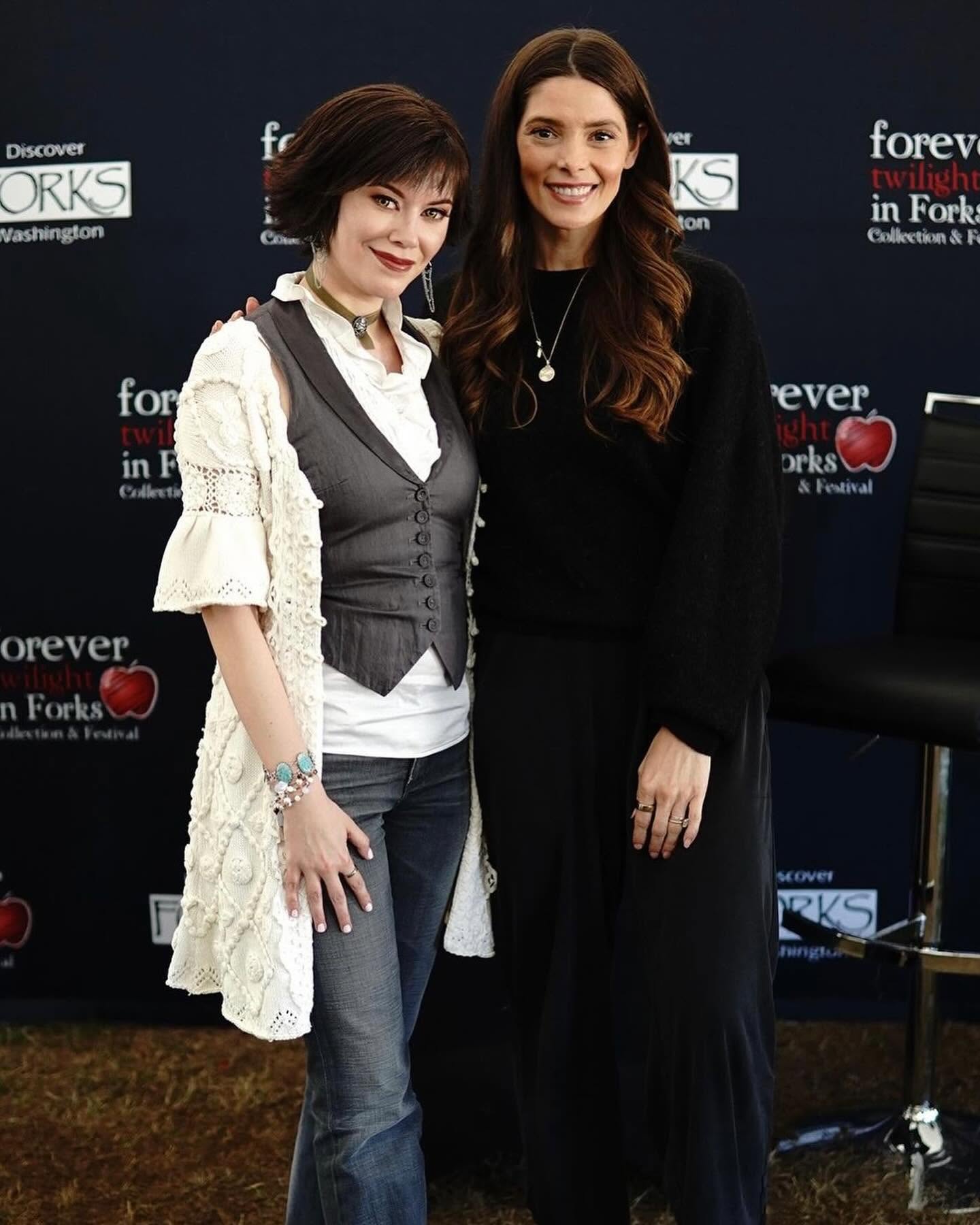
But Alice existed in my imagination before Ashley was ever cast, and the Alice I’ve portrayed all these years has inevitably become some combination of Stephenie Meyer’s character, Ashley’s performance, and me. I’ve never claimed to be an Ashley Greene look-alike, and physical resemblance has never been the thing I thought made me good at portraying Alice.
Some cosplayers do look remarkably similar to the actors who played their characters, and that can be amazing – but it’s not a requirement.
That’s why, when people ask which Twilight character they should cosplay, I’ve always told them to start with the character they love rather than the actor they happen to resemble. Because the alternative makes me sad.
I don’t want someone who loves Alice to decide she can’t cosplay her because she’s six feet tall, or someone who loves Rosalie to decide she isn’t beautiful enough. I don’t want someone who would make an incredible Carlisle to think he’s too young or too old, or someone who bought a Bella wig six months ago to leave it sitting in a box because she’s afraid strangers will tell her she doesn’t look like Kristen Stewart.
When we make physical resemblance the standard by which cosplay succeeds or fails, we aren’t only commenting on the people already doing it; we’re showing everyone watching what they can expect if they try.
There’s one more uncomfortable part of this conversation that I think is worth carefully acknowledging. I don’t think every negative comment comes from jealousy, and I’m not interested in convincing myself that everyone who makes fun of us secretly wants to be us. Sometimes, people just don’t like something.
But I also know that sometimes, dismissing something is easier than admitting that some part of it appeals to you.
Maybe someone else has built the screen-accurate wardrobe you’d love to own, is doing an event you wish you could attend, or is making content you’d be afraid to post yourself. Maybe they’ve simply given themselves permission to care openly about something you’ve spent years being told you should be embarrassed to like.
Sometimes, calling something cheap makes it easier to dismiss its value. Sometimes, calling it cringe makes it easier to distance yourself from the part of you that loves it.
I don’t really know what motivates any individual stranger in a comment section, but I think it’s worth considering why another fan expressing their love for the same thing we love can sometimes drive an instinct to knock them down.
Especially because, of all fandoms, Twilight fans should understand this better than anyone. We spent years being the embarrassing ones.
People – mostly men – mocked the books, the movies, the actors, the midnight premieres, the merchandise, and the teenage girls who loved all of it. A lot of us learned to say, “I know it’s bad, but I love it,” because simply saying “I love Twilight” felt like an invitation to be made fun of. Historically, we’ve laughed at ourselves before anyone could laugh at us.
Something shifted with the Twilight Renaissance, though. At a time when the world was locked down, people came back to the series in search of comfort, and suddenly, we were allowed to admit that maybe the thing everyone told us was embarrassing was fun all along.
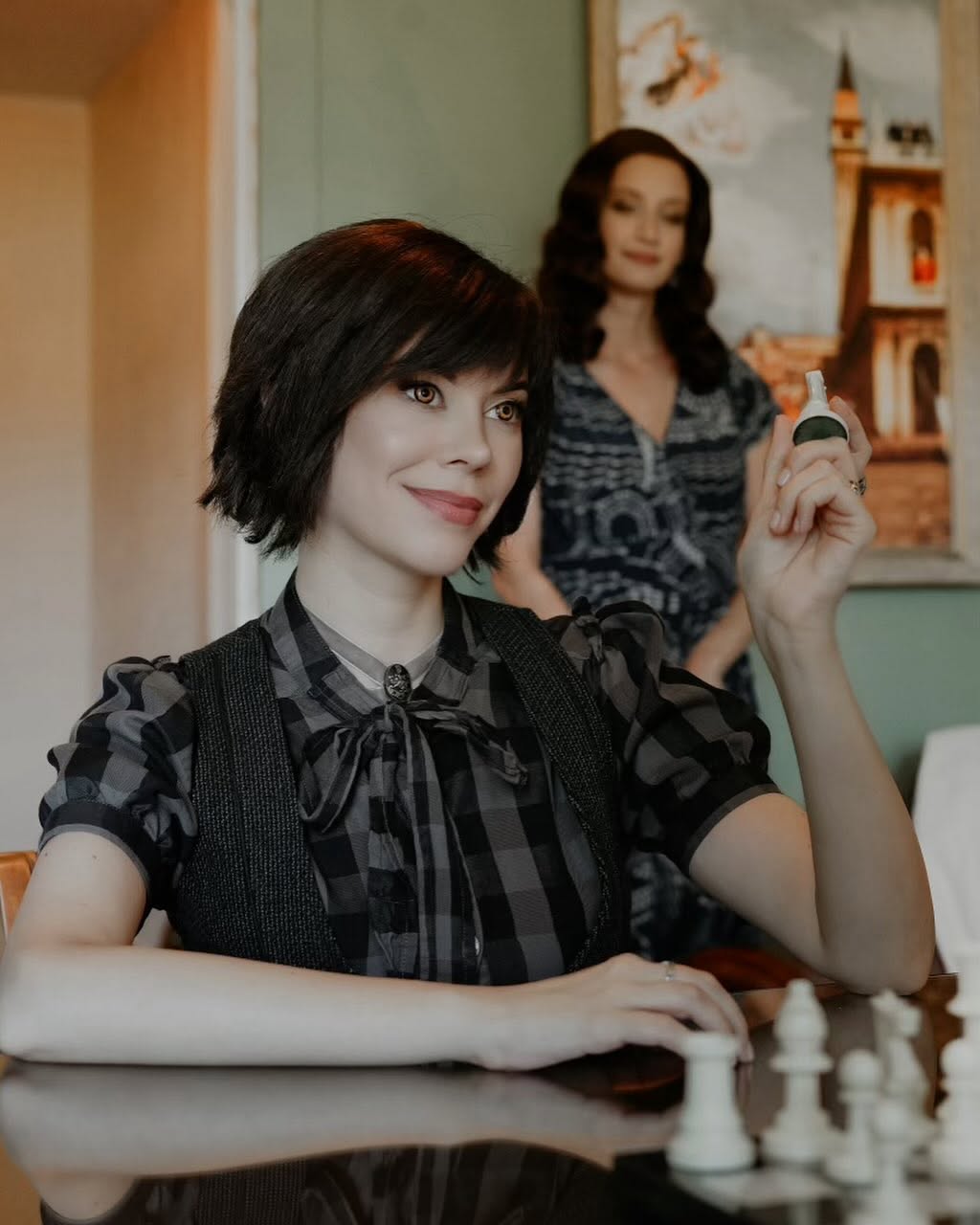
Which is why there’s something frustrating about watching people who have largely existed on the periphery of the Twilight fandom decide what participation in that fandom is supposed to look like. Cosplay, conventions, collecting, roleplay, and fan-created work aren’t strange new developments that arrived with the Twilight Renaissance; they’re part of what kept this community alive during the years when openly loving Twilight was a lot less fashionable. Because cosplay is, at its core, an act of fandom. It’s somebody saying, “I love this thing enough that I want to participate in it.”
To be clear, you don’t have to like every cosplay you see. You don’t have to think every wig looks good, every book-inspired costume is canon, or every interpretation of a character works. You’re allowed to have an opinion. You’re even allowed to think somebody looks absolutely nothing like the actor whose character they’re portraying.
You just… don’t have to tell them.
Because if you recognized Alice, Edward, Rosalie, or Jasper well enough to call them “Temu Twilight,” then somewhere along the way, the cosplay did what it was supposed to do. You saw Twilight – so maybe “Temu Twilight” isn’t the insult you think it is.
Earlier today, after one Temu comment too many, I blocked the word from my comment section entirely. And in doing so, I realized that maybe I’ve changed more than I’ve given myself credit for.
There was a time when I probably would’ve beaten you to the joke. I would’ve called myself Temu Alice first, laughed along, made sure everyone knew I was in on it before anyone had the chance to make me feel embarrassed.
These days, I don’t feel the need.
I’m proud of the Alice I’ve created. I’m proud of the work we do, and I know exactly how much goes into it. I’m not going to make myself smaller just because somebody else finds it funny to try.
So maybe I was wrong. Maybe I have changed.
I just didn’t need a thicker skin to do it.
xoxo,
Alice


My son and I attended Forks in 2019. You were the first cosplayer we had ever seen. And when you skipped into that room; believe me; you were Alice! You brought me to tears. Love what you do! Rebecca 62 yr old twihard
I think you’ve really hit the nail on the head and opened up a can of worms that, I think, has been been a long-time coming for this fandom.
If I may add from my own experiences, I remember when I bought the first book for the first time. I had borrowed a schoolmate’s copy, loved it enough to want my own, and my uncle’s boyfriend was kind enough to buy it for me before we watched a completely unrelated movie in the theater next door. When I opened the book to scan the familiar pages, there was a blue sticky note on the title page. I don’t remember exactly what it said but it was some iteration of “I implore you, set this book down and do not buy it. Buy any other book here, just not this one. Save yourself the mental anguish of reading this. Do not buy this book.” The person at the register was as perplexed as we were, but I saved the sticky note because, in my teenage mind, it felt like an act of defiance, and who doesn’t love being defiant in their teens? Somewhere out there was someone so disgruntled and unhappy that they took the time, energy, and money to stick warnings on at least one book. I honestly wish I still had the note. I’d frame it if I could.
As I became more entrenched in fandom culture, I began curating the art I took in. I bookmarked certain fanfiction pieces I still go back and read, I remember the art I used to have saved on my phone, the RP tumblr blogs I followed. But I also remember the backlash against depictions of Rosalie, Edward, Alice, and Bella as people of color, or even the hate POC cosplayers would receive when they posted cosplays of those characters.
It did a number on my confidence, not gonna lie. It was alienating. Suddenly I was too dark to cosplay as any of the characters I really loved, and honestly, I believed it for a long time. I was an impressionable teenager, who wouldn’t be at that age? All this to say that sometimes the people using the term Temu Twilight are also the same folks telling POC that they can’t interact with the media the same way they can, and they look a lot like the ones who criticized Hardwicke for wanting to make Alice Japanese. But they look a lot like the ones who had issues with the cast-
You get it lol this is just a long-winded way of saying it’s not that unlike the disgruntled and unhappy person leaving sticky notes in books. It accomplishes nothing and just makes them look like an ass.