
There’s a compliment I’ve received more times than I can count that I’ve never quite known what to do with: “you look just like Alice.”
I’ve heard the opposite, too: “you don’t look anything like Alice.”
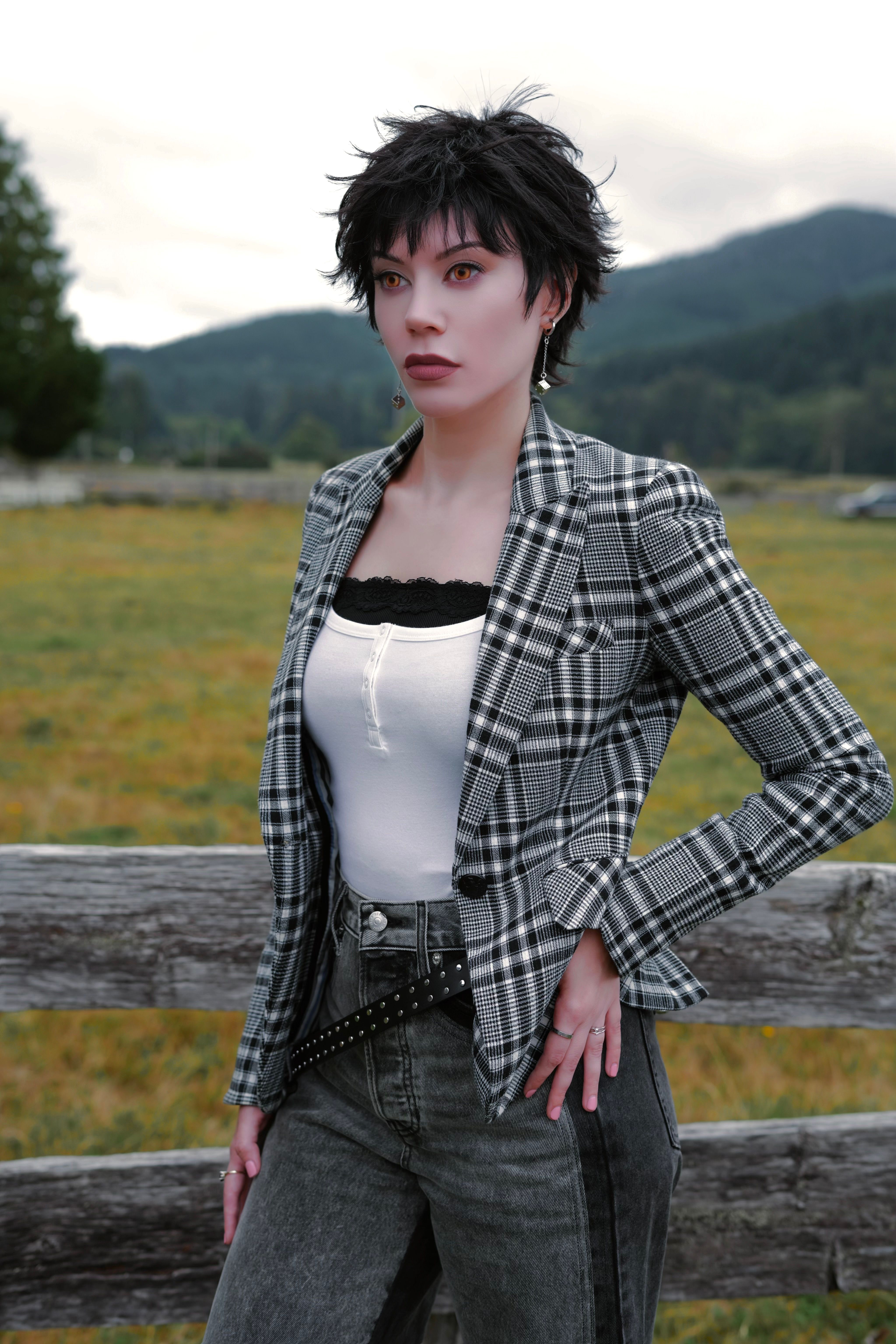
They sound like two completely different assessments, but they’re really two sides of the same coin. Neither person is talking about Alice Cullen; they’re talking about Ashley Greene. More specifically, they usually mean Ashley Greene as she appeared in Twilight, with the short dark hair flipping about her face and the lace and ruffles and ballet flats that have become immediately recognizable as Alice Cullen’s style.
For the record, I don’t think I look like Ashley Greene, but I do know which details make people recognize Alice before they’ve consciously registered what they’re looking at. There’s a visual shorthand to playing a character from a movie this culturally entrenched, and I know the language pretty well.
But increasingly, I’ve been thinking about the strange thing that happens when we confuse recognizing the shorthand with recognizing the character.
Because Robert Pattinson is not Edward Cullen. Kristen Stewart is not Bella Swan.
And Ashley Greene is not Alice Cullen.
They played those characters amazingly, but the distinction matters. They were actors cast to embody fictional people who already existed, and every one of those casting decisions represented an interpretation by a director, a casting director, a producer, a studio executive.
Notice the person missing from that list – because Stephenie Meyer didn’t cast Twilight.
If there is such a thing as a “real” Edward, or a real Bella, or a real Alice, those people exist only in Stephenie’s imagination. Their true faces are a delicious little secret that belongs only to her, and she’s made it clear that we haven’t ever seen them – not even on screen. The Cullens possess a kind of beauty and ability that doesn’t exist in human beings. No Hollywood actor was ever going to be a perfect match.
But that’s the wonderful thing about books; Stephenie didn’t need to show us exactly what she saw. She could tell us that Edward was devastatingly beautiful, with bronze hair, golden eyes, and skin like marble, and leave our imaginations to decide what that meant to us.
Before Twilight became a movie, I knew what Edward Cullen looked like. So did you, if you read the books first. I know my Edward wasn’t Robert Pattinson, just as my Alice wasn’t Ashley Greene. But I’m not sure I could draw either of them from memory now if I had to.
Nobody told me the people I’d imagined were wrong and the people on the movie poster were right; they just slowly disappeared beneath years of movie stills, GIFs, merchandise, edits, and rewatches. When I reach for Edward now, Robert Pattinson arrives first.
That’s one of the strange things adaptation does to us. A book gives us parameters and lets our imaginations fill in the rest; a movie makes those choices for us. And when one version has existed for long enough, and has been seen by enough people, we can start to forget there was ever another way to see them.
You can see it clearly in the way we talk about lookalikes. If someone resembles Kristen Stewart circa 2008, we say she “looks like Bella.” If someone has Robert Pattinson’s general bone structure, suddenly, we’ve found Edward Cullen on our timelines. The closer the resemblance becomes, the more convincing the claim seems to be.
But when we say someone looks like Edward Cullen, what do we actually mean? We’ve never seen Edward Cullen. We’ve seen Robert Pattinson dressed as him.
Somewhere along the way, we took the faces chosen for one adaptation of Twilight and promoted them from interpretation to canon. The closer someone looks to Robert Pattinson, the more “Edward” he seems to be; the closer someone looks to Kristen Stewart, the more readily we accept her as Bella.
Which is especially strange when you remember that the woman who created these characters didn’t choose those faces in the first place.
Social media has probably accelerated this because resemblance is incredibly easy to communicate. You don’t need to know anything about cosplay to stop scrolling when somebody looks uncannily like Kristen Stewart. You don’t even need to care deeply about Twilight. Recognition happens instantly, and there’s something satisfying about seeing a familiar face reproduced somewhere you don’t expect it.
Character, unfortunately, is harder to photograph.
You can’t necessarily tell from a perfectly composed image whether the person in it understands why Bella makes the decisions she does, or what Alice would say if you asked her a question that’s never been answered in a book or movie. You can’t see whether someone can inhabit a character once the pose is finished and the camera is pointed elsewhere.
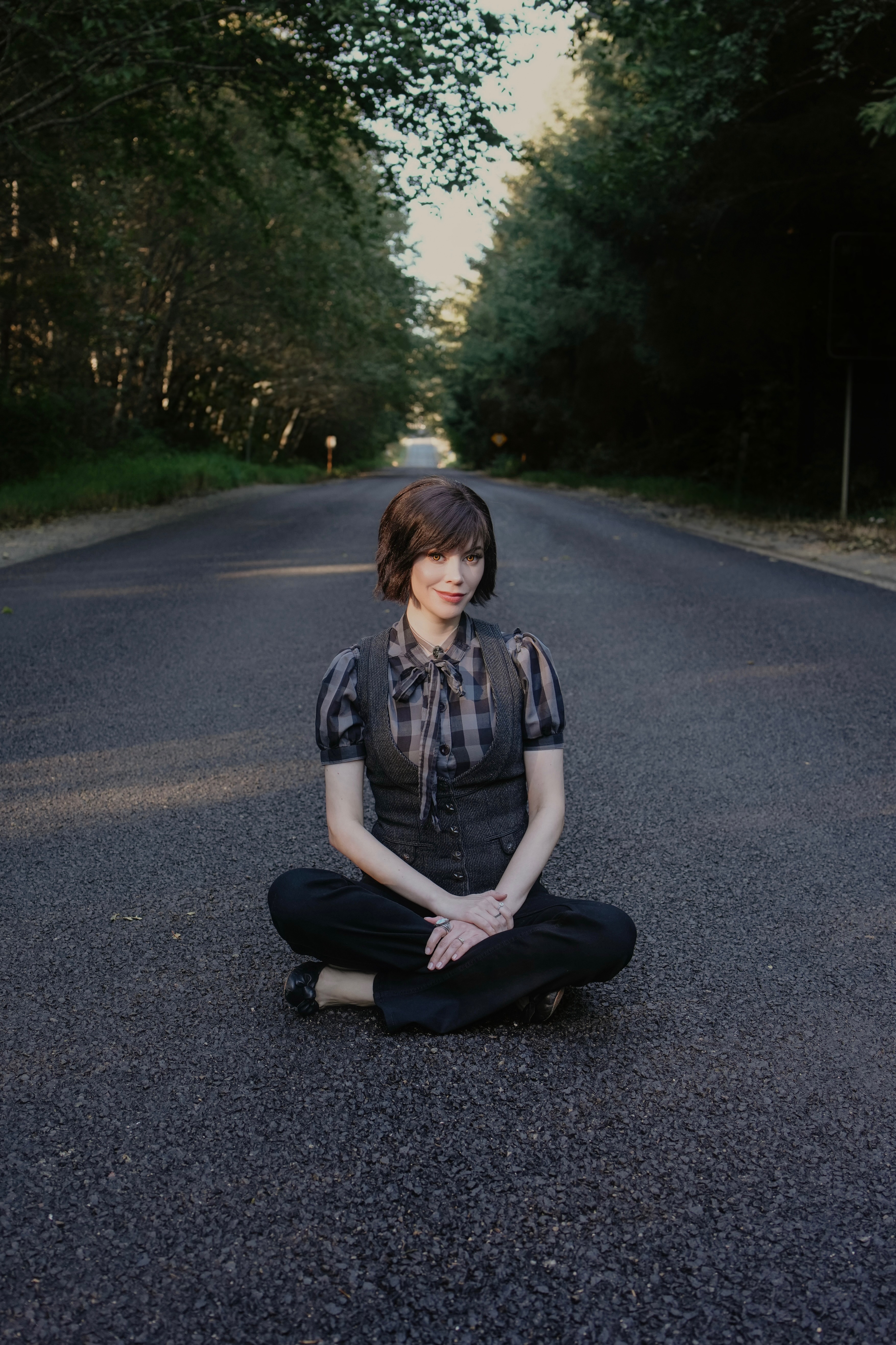
And maybe none of that matters for what they’re trying to make. There’s nothing wrong with wanting to recreate a movie still so accurately that people have to look twice, or being blessed with a face that happens to resemble a famous one and having fun with it. There’s an audience for that, and there has been for as long as there’s been famous people worth looking at.
I only become wary when people start to mistake resemblance for authenticity, because if looking the most like Robert Pattinson automatically makes someone the most convincing Edward Cullen, we’ve reduced playing a character to winning a genetic lottery.
And that leaves very little room for interpretation, imagination, or even Edward himself.
Because looking like a character and making someone believe in them are two very different things. I know that because I’ve been lucky enough to experience the difference from both sides.
My job in Forks is to help bring Twilight to life for other people. Most of the time, that means the magic is pointed outward. I know how the trick works because I’m part of the trick. I know Alice’s clothes came out of my suitcase that morning. I know the people underneath the costumes and all the decidedly unmagical logistics involved in putting fictional vampires in the right place at the right time.
When someone looks at us and feels, even for a moment, like they’ve stepped inside the world they’ve loved for years, the magic is working.
But I’ve been very lucky to have a handful of moments when the magic somehow turned around and came back toward me. One of them happened last year – and I wasn’t even there for it.
Our Edward and Bella from the Olympic Coven had done a photoshoot recreating the meadow scene from Eclipse. When I saw the pictures afterward, something about them caught me completely off guard. They were breathtakingly composed and lit, but it was more than that. It was the landscape, their expressions, and, most of all, the way they were looking at each other.
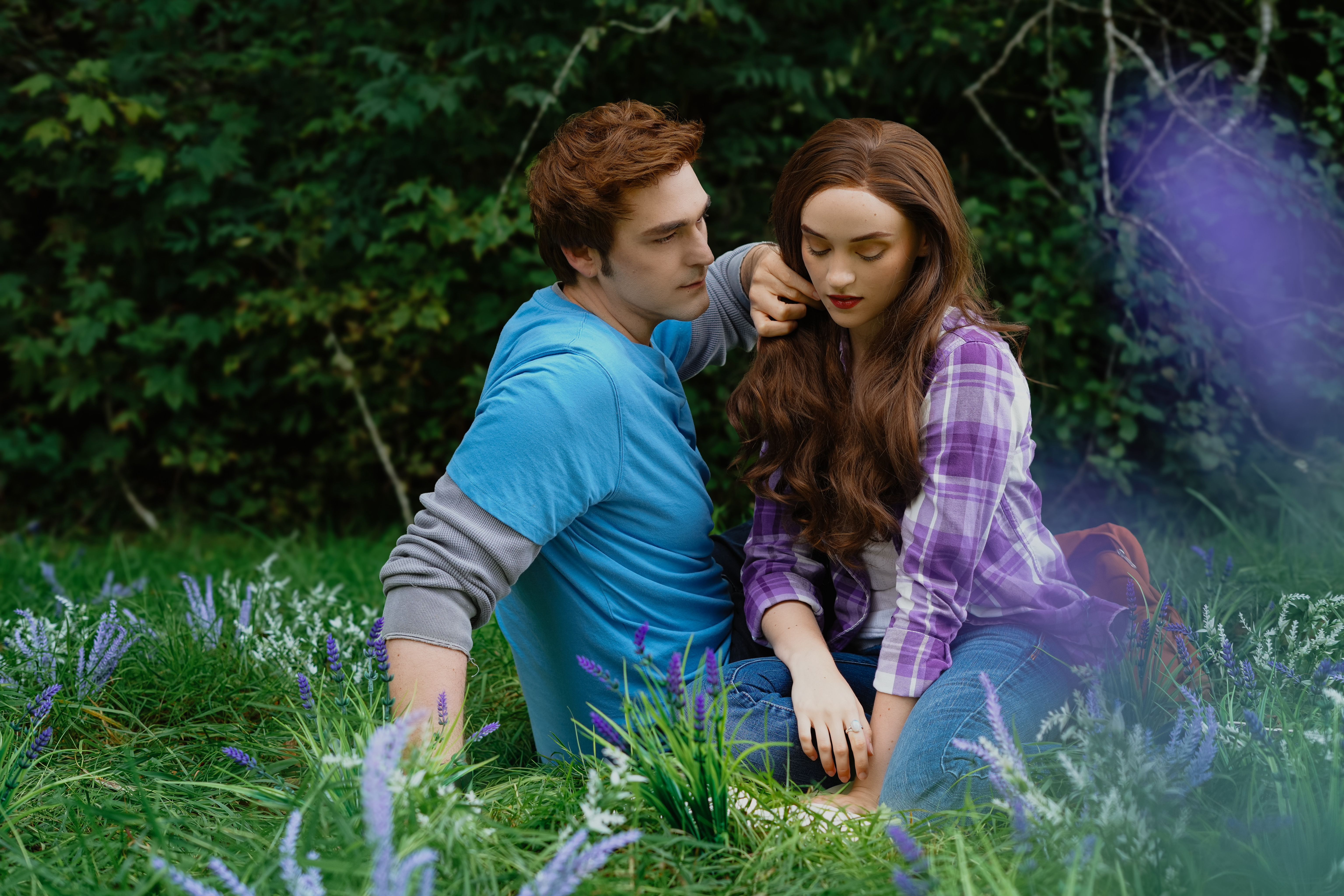
For one strange little moment, I wasn’t looking at two people I knew dressed as Edward and Bella. I felt like I’d seen Edward and Bella. Felt their essence.
There’s another moment I remember even more vividly. In 2018, the gala at Forever Twilight in Forks was themed after Edward and Bella’s wedding reception. We weren’t recreating the entire ceremony then, the way we are this year, but we were all there in our wedding attire, and at some point, Edward and Bella took the floor for their first dance.
I don’t remember how much of what happened next was planned. I just remember that suddenly, the rest of us Cullens were spinning around them.
I was dancing with Jasper, and somehow, everything seemed to fall into perfect unison. As he spun me, I’d turn out toward the crowd and see their faces before turning back to him, then out toward them again, caught in this whirl of music and color and movement. Every time I came around, I could see people crying.
And somewhere in the middle of it, I stopped feeling like one of the people responsible for making the illusion work. I was in it.
None of us in the room were doppelgangers for the actors who played our characters. It just… didn’t matter. Edward and Bella were in the middle of the room, completely absorbed in each other. Their family was dancing around them. We were in Forks. The room was full of people who’d arrived wanting to enter this world with us, and in that moment, all the conditions were exactly right for imagination to take over.
It felt real to me, too.
I think about those moments whenever I wonder what it means to “look like” a fictional character, because neither depended on physical resemblance, and both convinced me more completely than resemblance ever has.
The Edward in those photographs didn’t need Robert Pattinson’s face. He needed to look at Bella in a way that made me recognize Edward. That’s a completely different kind of likeness.
The movies gave Twilight a shared visual language, and I love that language. I’ve spent years studying its clothes, visiting its locations, and recreating pieces of the world it built. There’s something genuinely wonderful about the fact that you can put a pea coat on someone with bronze hair and have thousands of people understand the reference immediately.
I just… don’t want the shared image to cost us the individual one.
Once we decide there’s a correct face for Edward Cullen, we’ve taken a character who once existed differently in millions of imaginations and narrowed him down to the dimensions of one human man. We’ve done the same thing to Bella, and Alice, and Rosalie. The actors’ interpretations haven’t simply joined ours; they’ve overwritten them.
Maybe that’s what I’m most reluctant to give up.
The beauty of fiction is that it lets us visit places that don’t exist. Those worlds can feel impossibly expansive or small enough to belong only to us, but there’s room for both because my imagination doesn’t place any limits on yours. My Alice doesn’t have to look like your Alice. We can read the same words, love the same character, and see two entirely different faces.
Alice Cullen can look like Ashley Greene. She can look like me. She can look like you. Edward can look like Robert Pattinson, or like the person you imagined the first time you read Twilight, or like someone who bears very little resemblance to either of them but stands across a meadow from Bella, looks at her in exactly the right way, and makes something inside you say, without hesitation, “there he is.”
Maybe there are “real” versions of these characters somewhere, but if there are, only Stephenie gets to see them. The rest of us have the characters on the page, the actors’ interpretations on screen, and all the versions we’ve imagined in between.
Cosplay lives in that space, too.
Maybe that’s the part of it I’m most protective of: not our ability to imitate something we’ve already seen, but our permission to imagine it again.
I’m thinking about that today as I begin my journey back to Forever Twilight in Forks, where I’ll spend another week helping make an imaginary world feel real. Because when I’m in Forks, I don’t really want someone to look at me and think that, from the right angle, I could pass for Ashley Greene.
I’d much rather they look at me and see Alice.
And every once in a while – if I’m really lucky – I get to see her, too.

